Anyone shopping for a home in Blount County right now has probably seen the same headline number: prices are up. Redfin's county-level data for the three months ending May 2026 puts the median sale price at $442,000, a 9.1 percent jump from the same window a year earlier, with price per square foot climbing 9.3 percent to $234.
Then that same buyer opens a search filtered to Maryville and the story reverses. Multiple sources tracking Maryville specifically, including Redfin-sourced figures cited by local market guides, show the city's own median sale price falling roughly 9.3 to 9.4 percent year over year in early 2026, landing somewhere between $371,000 and $394,500 depending on the exact month measured. Same county. Same season. Opposite direction.
This isn't a data error. It's a mix shift, and understanding it tells you something the countywide number can't: what's actually happening inside the neighborhoods you're comparing.
Two markets wearing one label
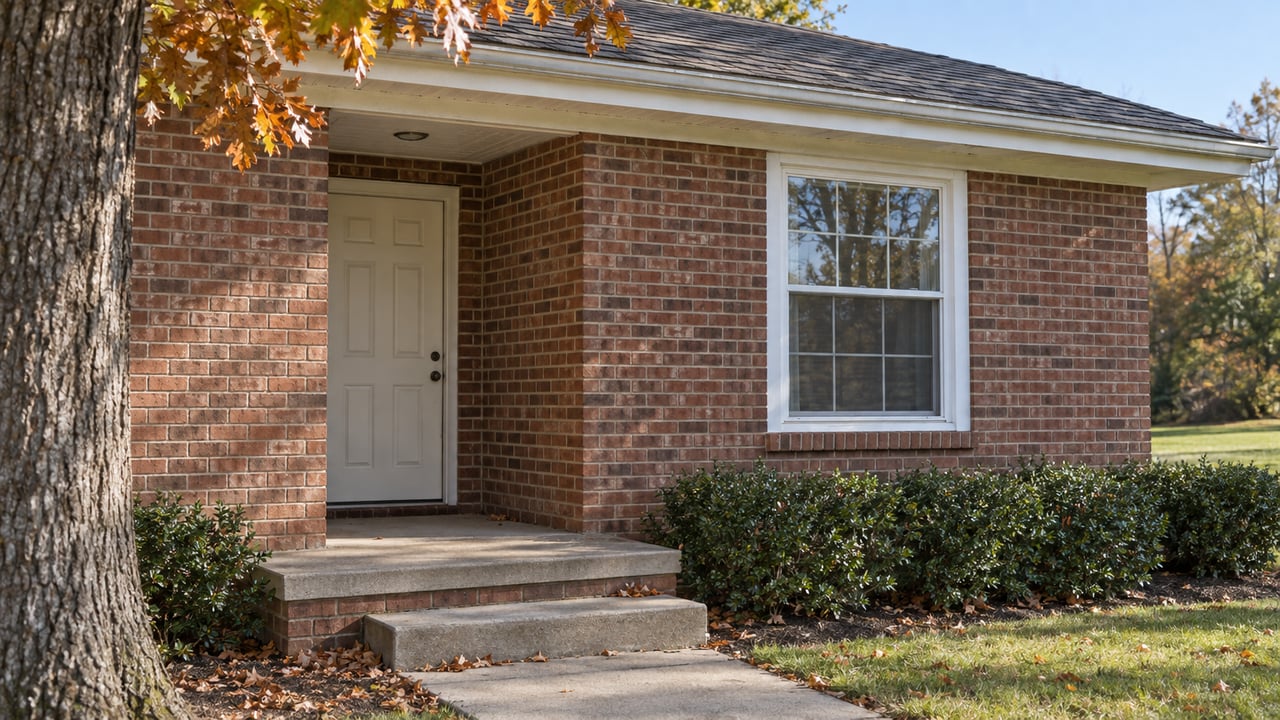
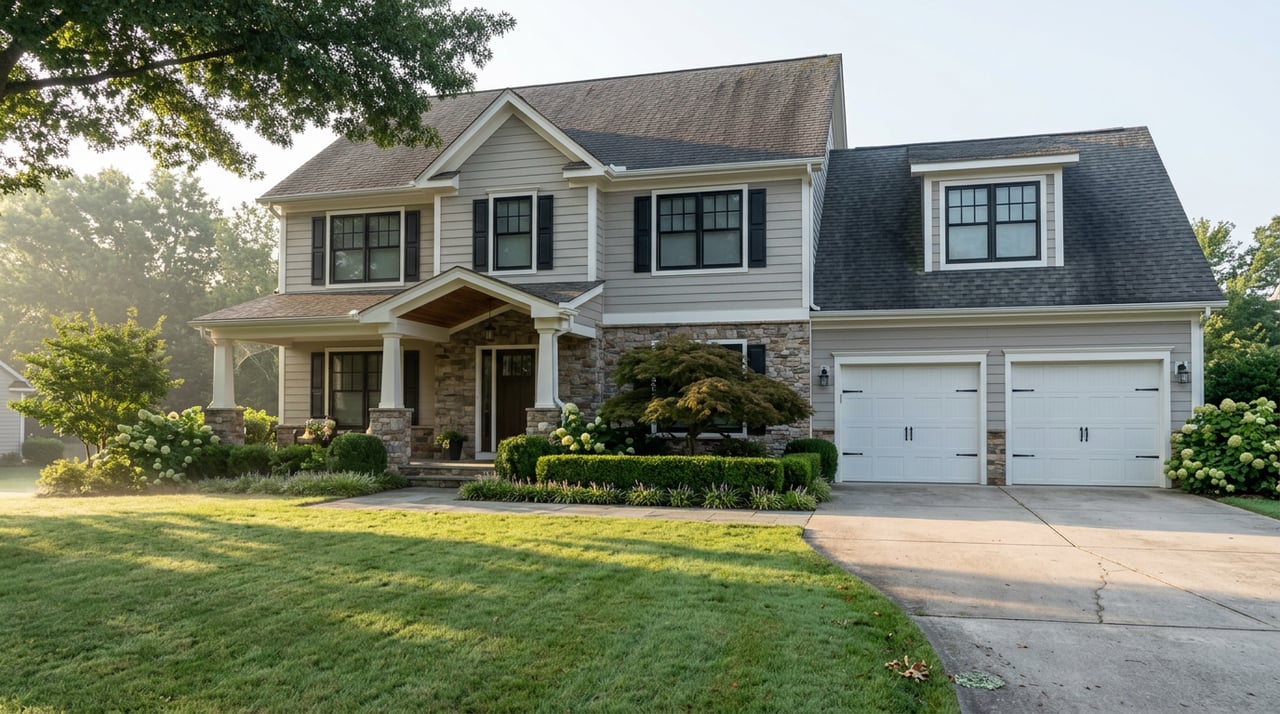
Blount County contains eight incorporated cities with wildly different housing stock and wildly different growth stories. Louisville, the small town that sits along Fort Loudoun Lake on the county's northern border, roughly seven miles northwest of Maryville, is currently the most expensive place to buy in the county, with a median listing price of $575,000. Maryville, the county seat with an older, denser mix of postwar ranches and college-town starter homes, sits well below that.
When a county's overall median rises while its largest city's median falls, the arithmetic usually means one thing: a disproportionate share of the higher-priced sales are happening somewhere other than that largest city. In Blount County's case, that somewhere is Louisville, and it isn't a coincidence.
| Market | Metric | Figure | Window |
|---|---|---|---|
| Blount County (countywide) | Median sale price | $442,000, up 9.1% YoY | 3 months ending May 2026 |
| Maryville (city) | Median sale price | $394,500, down 9.35% YoY | Through April 2026 |
| Louisville (city) | Median listing price | $575,000 | Current |
What's pulling Louisville up
Louisville's price growth traces back to a single 2021 announcement that's still reshaping the area five years later. Smith & Wesson relocated its corporate headquarters from Springfield, Massachusetts to a site off Proffitt Springs Road in Blount County, bringing hundreds of manufacturing and distribution jobs with it. The Tennessee Department of Transportation has since developed a State Industrial Access project, officially named Project Eagle, to widen State Route 334, also called Louisville Road, from Proffitt Springs Road to Topside Road. The project will take the corridor from two 11-foot lanes to a fuller cross-section with curb, gutter, and paved shoulders, and TDOT expects construction to begin in the first half of 2027.
That kind of infrastructure investment doesn't happen for a road nobody expects to get busier. It's a direct response to the traffic the new headquarters is already generating, and it signals to builders that Louisville is a corridor worth developing around.
The Siemens Healthineers side of the county's growth adds another data point. On April 8, 2026, the Blount County Industrial Development Board finalized the sale of roughly 11.61 acres between Jackson Hills Drive and Clayton Drive to Siemens Medical Solutions USA for $1.875 million, expanding the company's footprint in the county.
Builders have followed the jobs to the lake. Hidden Cove Acres, a new lakefront community on Fort Loudoun Lake, is bringing 17 planned lots to Louisville. Preserve at Lashbrooke, another Louisville development, is marketing itself on a clubhouse, pool, fitness center, tennis and basketball courts, and a playground. These are the kinds of listings that move a median upward fast, because they're priced for buyers who want water access and new construction, not buyers comparing square footage against a 1960s brick ranch.
What's actually happening inside Maryville
None of this means Maryville is soft. It means Maryville is normalizing after a run of tight inventory, and the on-the-ground numbers back that up.
Price reductions in Maryville fell from 64.9 percent of listings a year ago to 52.2 percent as of April 2026, meaning fewer sellers are having to cut their asking price to get a deal done. At the same time, the share of homes selling above asking price rose from 16.56 percent to 22.53 percent, and the sale-to-list ratio held at 98.27 percent. Inventory is still tight by historical standards, with roughly 0.94 months of supply reported in April 2026, down from 1.74 months a year earlier. Those aren't the signals of a market losing demand. They're the signals of a market where the median is being pulled down by a change in what's selling, not by buyers losing interest.
Part of that change is new supply hitting the market at a lower price point than the older homes it's replacing in the sales mix. Bennett Village, a townhome community in Maryville, has floor plans like the Lily, a two-bedroom, two-and-a-half-bath layout with an open-concept main level, listed with an estimated completion in September 2026. Townhomes and smaller-footprint new construction tend to sell for less than the detached homes they're being counted alongside, which pulls a blended median down even while individual home values hold or climb.
Maryville is also investing in the kind of amenity that keeps a downtown desirable rather than just affordable. The Armory, a new entertainment venue built inside what a developer described as nine holes of a former golf course, was slated to open in Maryville this spring or summer with an indoor mini-golf concept. Massey Group's director of operations, Jeanette Beaverson, described the format as "putt putt, digital, very fun, very short, interactive courses." Co-founder Jimmy Loup, explaining why he chose Maryville for the concept, said the city's business culture "reminds me in a good way of doing business in the 90s."
That's not a throwaway detail. A downtown adding entertainment and hospitality investment while its median price cools is a different story than a downtown losing relevance. It's a market where the composition of what's selling is shifting under a still-solid foundation of demand.
What this actually buys you
The practical upshot for anyone comparing Maryville to the rest of Blount County is that the city's price bands are wider than a single median suggests. Established neighborhoods on the more affordable end, including areas like Eagleton Village, can put buyers into a home in the low $200,000s. On the other end, premium pockets like Chilhowee Hills carry price tags of $700,000 and up. A single citywide median sitting in the $370,000s to $390,000s range doesn't describe either of those buyers experiences, and it definitely doesn't describe what's happening just up the road in Louisville, where residents commonly drive seven to eight miles into Maryville for big-box shopping.
If you're comparing a move to Maryville against a move to Louisville or another Blount County city, the honest way to do it is to ask what each city's growth is actually built on. Louisville's is built on industrial relocation and lakefront new construction aimed at a higher price point. Maryville's is built on a college-town core absorbing new, smaller-footprint housing while its downtown adds the kind of amenities that keep long-term residents in place.
A few questions worth asking before you compare cities
Does a falling median mean Maryville home values are dropping? Not necessarily. A city median can fall because more lower-priced homes are selling relative to higher-priced ones, even while individual homes hold their value. The sale-to-list ratio staying near 98 percent and price reductions becoming less common both point to a market where sellers aren't losing leverage.
Should I expect the Blount County median to keep rising the same way? That depends largely on how much of the county's growth stays concentrated in Louisville's industrial and lakefront corridor. If Smith & Wesson and Siemens continue expanding and Louisville's new lakefront communities keep building out, the countywide number is likely to keep reflecting that growth more than it reflects Maryville's own market.
Is now a good time to buy in Maryville specifically? Tight inventory, a high sale-to-list ratio, and fewer price cuts all suggest sellers still have room to negotiate from a position of strength, even with the median showing a year-over-year decline. Anyone weighing that timing should look at comparable sales in the specific neighborhood they're considering rather than the citywide or countywide figure.
If you're trying to figure out what a specific Maryville neighborhood, price band, or new construction community actually looks like right now, that's the conversation worth having before you make an offer based on a number that may not describe the street you're buying on. The Blankinship Group works across Maryville and the rest of Blount County every week and can walk you through what the current data means for your specific search. Request a confidential consultation and a free home valuation to start that conversation.