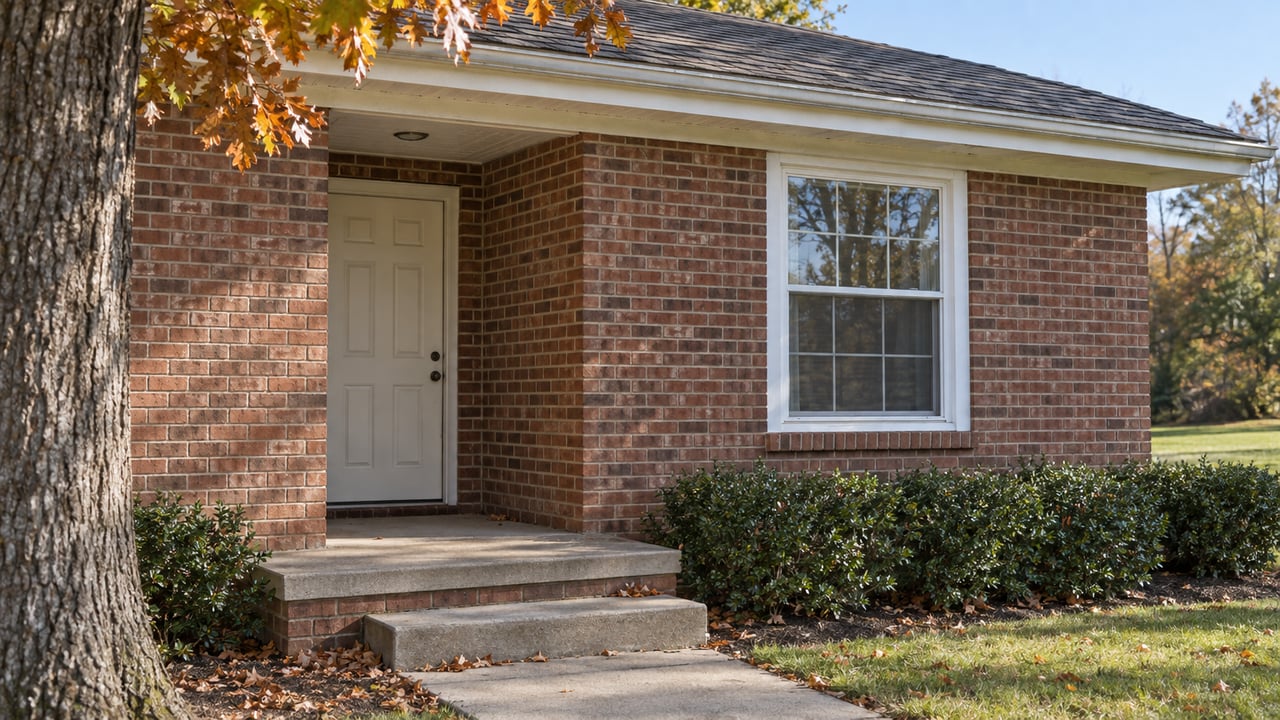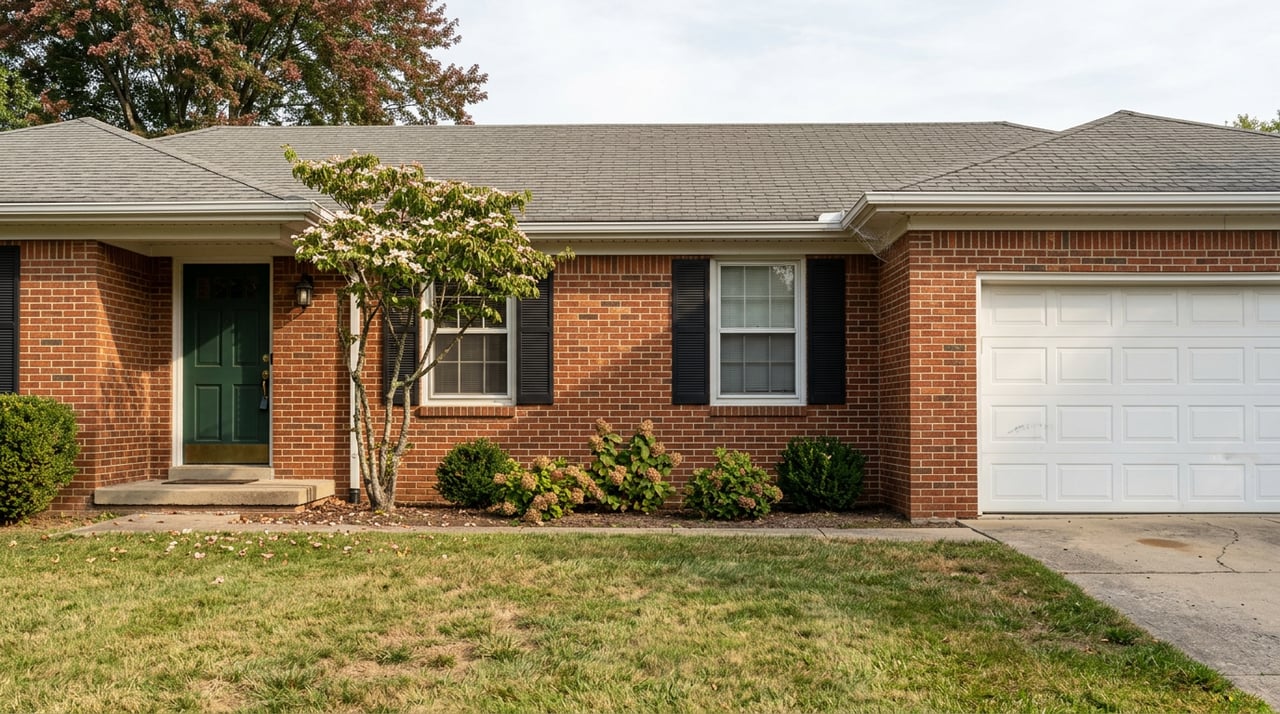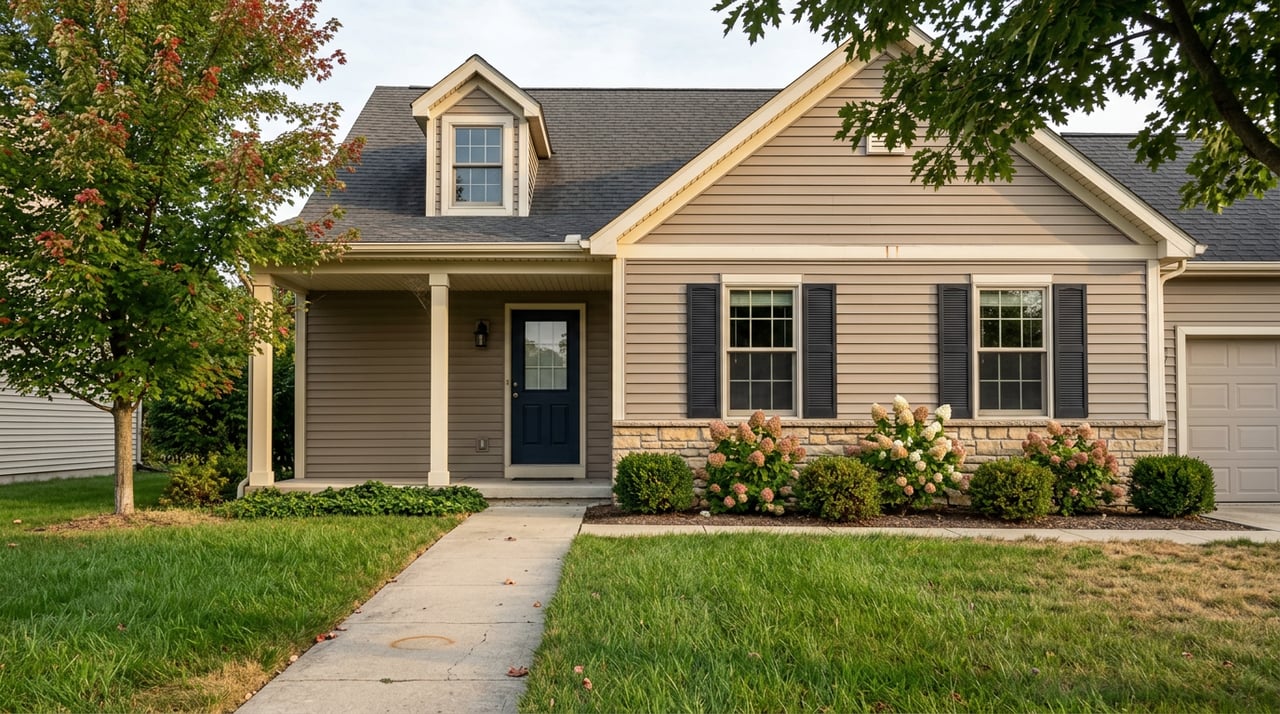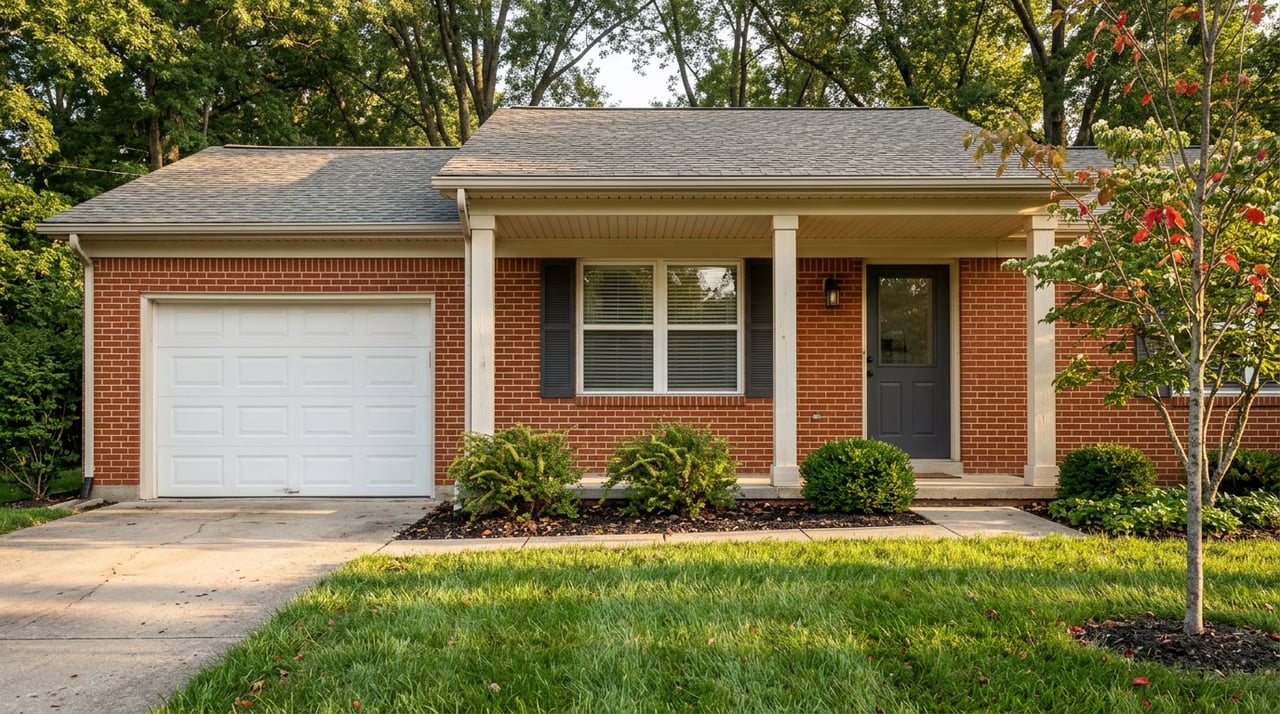
Scroll through Oak Ridge listings long enough and you will hit one with a headline like "Well-maintained D model with updated facade." Nobody explains what a D model is. The listing assumes you already know, because in this city, thousands of buyers over eight decades already have.
Those letters refer to the alphabet houses, the roughly 2,500 prefabricated homes built during World War II to shelter Manhattan Project workers almost overnight. They are made of cemesto, a panel material with an asbestos cement skin, and they still make up a large share of the housing stock in Oak Ridge's older sections. For a buyer or seller who is past browsing and actually writing or reviewing an offer, the letter on the listing is not the part that matters. What matters is what happens after the disclosure form is signed, when the appraiser, the insurance underwriter, and the lender each look at the same house and ask a different question.
What a Cemesto House Actually Is
Cemesto panels are a Celotex fiberboard core sealed on both faces with asbestos cement, a material the Celotex Corporation introduced in 1931 and marketed as a fast, low-cost way to mass-produce housing. The architecture firm Skidmore, Owings & Merrill adapted the system for Oak Ridge, and builders could turn out a finished house roughly every thirty minutes once the assembly process was running, a pace of about 17 houses a day. The result is a house that looks conventional from the street but is structurally different underneath the paint. Interior walls are panels slid into wood frames rather than stick-built drywall over studs, which is why longtime residents mention that hanging anything on an interior wall means drilling a pilot hole first rather than just driving a nail.
The Letter Doesn't Tell You the Square Footage
Not every alphabet house is the same size, and the difference matters more than the shared "cemesto" label suggests. Type A was the smallest, a two-bedroom design. Type B was larger and rectangular. Type C took an L-shaped layout. Type D was larger still and effectively became a template for the postwar American ranch house. Rarer G models, confirmed to exist by longtime local historian D. Ray Smith, came in at 672 square feet, about 96 square feet smaller than a Type A, and were likely built later, possibly in the 1950s, after the original A through F series. If you are comparing two "alphabet houses" on paper, the letter alone will not tell you whether you are looking at a 700-square-foot starter or something closer to a small ranch.
The Disclosure Box Is the Easy Part
Tennessee's Residential Property Condition Disclosure form asks sellers directly whether they are aware of environmental hazards including asbestos, radon, lead paint, or contaminated soil. The obligation is triggered by the seller's actual knowledge, not by any requirement to test. A seller who has never had the walls tested can, in good faith, leave that box blank. Under state law, a buyer who later discovers an undisclosed material defect generally has one year from discovery to bring a claim, which means the paperwork protects a seller who did not know, not a buyer who assumed the box would have been checked if there were anything to check.
That single fact reframes the rest of the transaction. The disclosure form is not where a cemesto house creates friction. It is where the friction starts.
| Step | What it actually checks | Where cemesto changes the answer |
|---|---|---|
| Seller disclosure | Seller's known hazards, self-reported | Asbestos only appears if the seller already knows and says so |
| Home inspection | Visible condition, systems, moisture | General inspectors are not licensed to test for asbestos; they can flag it, not confirm it |
| Mortgage appraisal | Market value plus, for FHA loans, minimum property standards | Panel wall construction and thin recent-sale comps in legacy blocks can complicate both value and condition scoring |
| Insurance underwriting | Age of wiring, plumbing, and roof, plus claims history | Manhattan Project-era construction is called out by name as a premium factor |
Where the Appraisal Gets Stuck
FHA appraisals do double duty. Beyond estimating market value, the appraiser has to confirm the home meets HUD's minimum property requirements: a sound foundation, safe electrical systems, a roof with at least two years of remaining life, and no major structural defects. A conventional appraisal is less strict about condition but still leans on comparable recent sales to set value. That is where a legacy cemesto block can create a real problem. If a neighborhood built entirely during the war years has had few recent sales, an appraiser working a conventional file may end up pulling comps from a newer subdivision a few streets over, which does not share the same construction, lot pattern, or buyer pool. The mismatch does not show up as a line item. It shows up as a number that feels wrong to everyone in the transaction and nobody can quite explain why.
The Insurance Quote Is the Number Nobody Warns You About
Homeowners insurance pricing in Oak Ridge varies by construction era in a way that is stated plainly by local carriers. Manhattan Project-era homes, along with 1960s and 1970s construction, tend to carry higher premiums because of older electrical, plumbing, and roofing systems, according to a 2026 guide from a regional Anderson County insurance agency. For a typical 1,800-square-foot home valued around $265,000, that guide puts annual premiums in the $1,100 to $1,500 range with a standard deductible, assuming the roof and systems are in reasonable shape. Roofs older than 15 years can push premiums up another 20 to 40 percent. Tennessee carriers also frequently separate wind and hail into its own deductible, calculated as a percentage of dwelling coverage rather than a flat dollar figure. On a $300,000 policy with a 2 percent wind and hail deductible, that is $6,000 out of pocket before coverage kicks in, a detail worth knowing before storm season rather than after a claim.
The City Already Picked a Side, Mostly
Oak Ridge's own planning documents describe a housing stock where more than half the homes were built before 1959 and very few new units have been added since. The city has responded with tools most Tennessee municipalities do not have. The Oak Ridge Land Bank is one of only three land banks in the state, built specifically to receive and resell blighted properties rather than let them sit. In the Highland View neighborhood, which sits inside a federal Opportunity Zone, the city and its housing development partner have pushed the Waddell Place project as a demonstration effort, with new model house plans designed to complement the area's historic character rather than replace it outright.
At the same time, the city has spent real money demolishing deteriorated cemestos it considers unsalvageable, a process that costs more than ordinary demolition because asbestos becomes part of the debris once a structure is torn down. A 2012 guest column in a local Oak Ridge news outlet pushed back hard on this pattern, arguing the historical record does not support treating cemestos as temporary housing the city can write off. The disagreement was never fully settled, and it is still visible today in which streets get preservation attention and which get a demolition order.
For a buyer, that unresolved tension is not academic. It is the difference between a street the city is actively investing in and one it may eventually clear.
A Few Questions Worth Asking Before You Write an Offer
Ask for an asbestos test even though Tennessee law does not require the seller to provide one. Testing costs a few hundred dollars and tells you what a general inspection cannot.
Get a firm insurance quote before your earnest money goes hard, not after. A cemesto house that looks affordable on the listing can carry a premium that changes your monthly math.
Ask whether the specific block has come up in city discussions about the Land Bank, blight removal, or the Highland View revitalization effort. That history is public and it signals which direction property values on that street are likely to move.
Before you plan any renovation involving interior walls, confirm the construction with a contractor familiar with cemesto panel systems. Standard drywall repair techniques do not apply the same way.
A Few Questions We Hear Often
Does Tennessee require a seller to test for asbestos before listing? No. The law only requires disclosure of hazards the seller already knows about, and testing is not mandatory.
Are all of Oak Ridge's older homes cemesto? No. The city's WWII-era housing includes cemesto panel construction alongside other frame types built in the same period, so a home's age alone does not confirm its construction.
Can a cemesto house qualify for a conventional or FHA loan? Yes, but expect closer scrutiny. FHA appraisers in particular will evaluate condition against HUD's minimum property standards, and the panel wall system can complicate how repairs and comps get read.
If you are looking at a specific alphabet house in Oak Ridge and want to understand what its letter, its block, and its age actually mean for financing and insurance before you write an offer, The Blankinship Group can walk through the specifics with you. Request a confidential consultation and a free home valuation, and get answers grounded in this market rather than a national checklist.